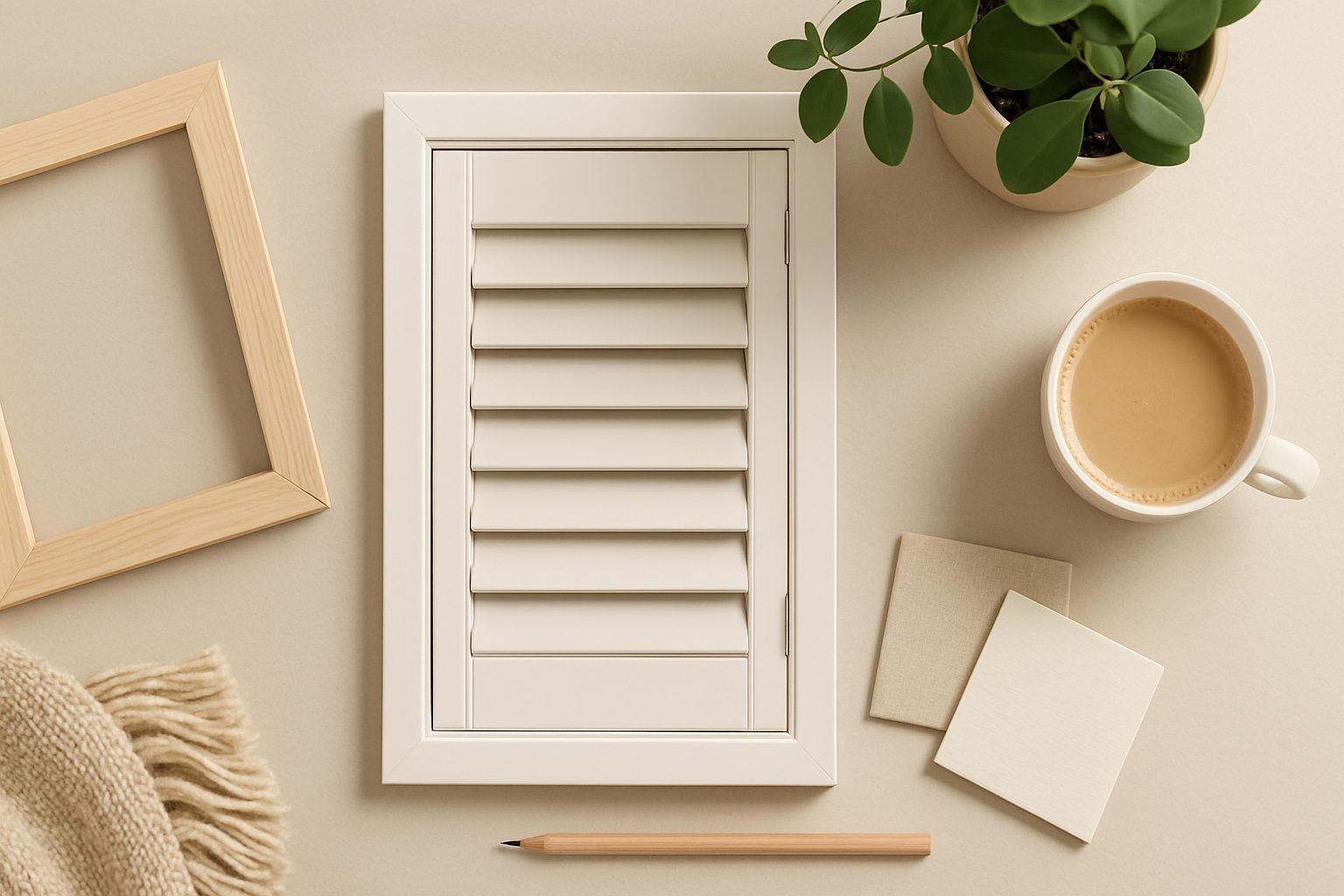
Best Window Shutters for Privacy Without Losing Light in UK Homes
The challenge with window shutters is familiar: you want to block unwanted views into your home, but closing them feels like drawing curtains in daylight. The good news is that modern plantation shutters—and the way you configure them—can genuinely balance both. The trick lies in understanding louvre angle, slat width, and material choice.
Why standard shutters fall short
Most people assume that shutters are binary: open or closed. Solid panel shutters certainly feel that way—they either let light flood in or they seal off the room entirely. But louvred shutters work differently. Their adjustable slats mean you can fine-tune light and privacy simultaneously, letting in enough daylight to avoid that bunker-like feeling while keeping nosy neighbours from peering in at eye level.
The catch is that not all louvred shutters are created equal, and slight differences in design dramatically affect how well they pull this off.
Louvre angle and sightlines
The most important factor is louvre angle. When slats are nearly horizontal (say, 15–20 degrees), they block sightlines effectively while allowing light in from above. Someone standing outside looking directly at your window will see only the edge of the slats; they won't see into your room. Meanwhile, light from the sky and upper angles bounces off those slats and into your home.
Conversely, shutters with slats angled at 40–45 degrees are far less private. They create gaps that allow direct sightlines through the window when viewed from certain angles. You'll often see these angles in cheaper shutters or those designed purely for aesthetics.
Many UK shutter suppliers now offer adjustable louvre angles—or let you choose your preferred angle when ordering. If privacy is a priority, specifically ask for a shallow angle rather than assuming all 'louvred' shutters work the same way.
Slat width and the light question
Slat width is the second major variable. Shutters typically come with slat widths of 63mm, 76mm, or 89mm (roughly 2.5, 3, and 3.5 inches).
Wider slats (89mm) let through more light because there's more slat-to-gap ratio in your favour. If you're worried about losing daylight, wider slats are genuinely better. They also look more modern and create cleaner sightlines when opened fully.
Narrower slats (63mm) are more traditional and offer finer control over light and privacy because the gaps between them are smaller. If your concern is privacy above all else, narrower slats give you more granular adjustment—you can open them just 20–30 degrees and still get reasonable light while keeping views-in minimal.
The real world usually sits in the middle: most people in UK homes choose 76mm as a sensible compromise. It's wide enough that you don't feel you're losing light, but narrow enough that privacy control remains effective.
Material matters
Wood plantation shutters are the premium choice for light and privacy balance. Hardwoods like basswood scatter and diffuse light naturally, so even when slats are mostly closed, the light that does come through feels softer and more diffused than it would through vinyl or composite. This psychological effect—light that feels like daylight rather than gaps—is one reason people prefer wood despite the higher cost and maintenance.
Composite and PVC shutters are cheaper and easier to clean, especially in moisture-prone rooms like kitchens and bathrooms. They transmit light much like wood does, but they won't have quite that same warm, diffused quality. For privacy specifically, the material makes little difference; it's the louvre angle and slat width that matter.
If you're in a high-moisture area (near a coast or in a damp room), composite is the practical choice. Wood requires regular maintenance and will eventually warp if exposed to persistent damp. For living rooms and bedrooms where you want that premium feel and don't have moisture concerns, hardwood is worth the investment.
Putting it together
The best privacy-and-light balance typically comes from:
- Louvre angle of 15–25 degrees (shallow angle, block sightlines)
- Slat width of 76mm (good light transmission, reasonable privacy control)
- Hard-wearing material suited to your room (wood for living spaces, composite for kitchens)
This combination lets you set the shutters to roughly 30–40 degrees of opening during the day. You'll get enough daylight to avoid feeling boxed in, while sightlines into your home remain blocked for anyone standing outside.
Final thought
If you're choosing between louvred and solid shutters, louvred wins on this criteria hands down. If you're comparing different louvred options, ask suppliers about their louvre angle and slat width—don't just look at pictures. A small difference in these specs translates to a real difference in how the shutters perform.
For more detail on how louvred shutters compare to solid options, see the louvred versus solid shutters article. If you're specifically interested in the premium end, plantation shutters remain the best option for balancing privacy and light.
More options
- MDF Plantation Shutter Panels – Amazon UK (Amazon UK)
- PVC Waterproof Shutter Panels – Amazon UK (Amazon UK)
- DIY Interior Shutter Kit – Amazon UK (Amazon UK)
- Venetian Blinds (Comparison Alternative) – Amazon UK (Amazon UK)
- Shutter Fitting & Measuring Tools Bundle – Amazon UK (Amazon UK)